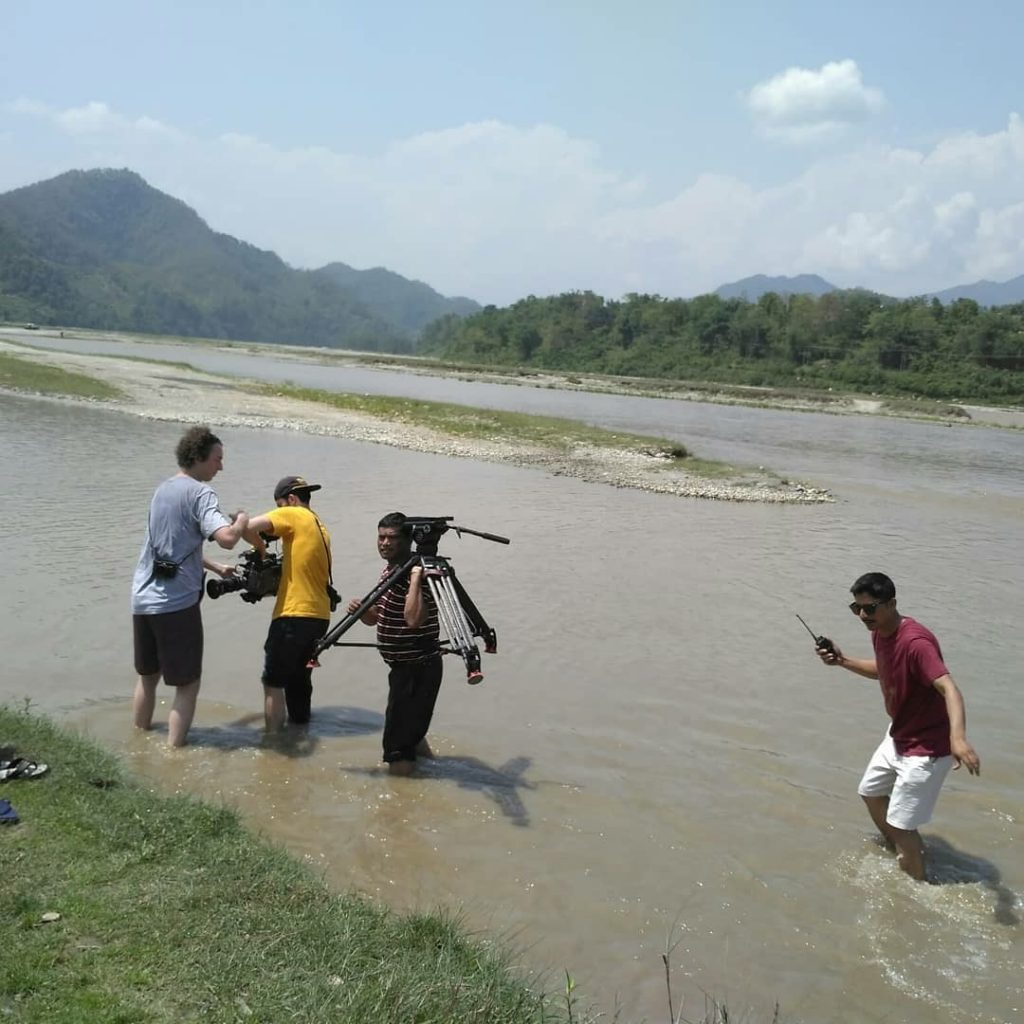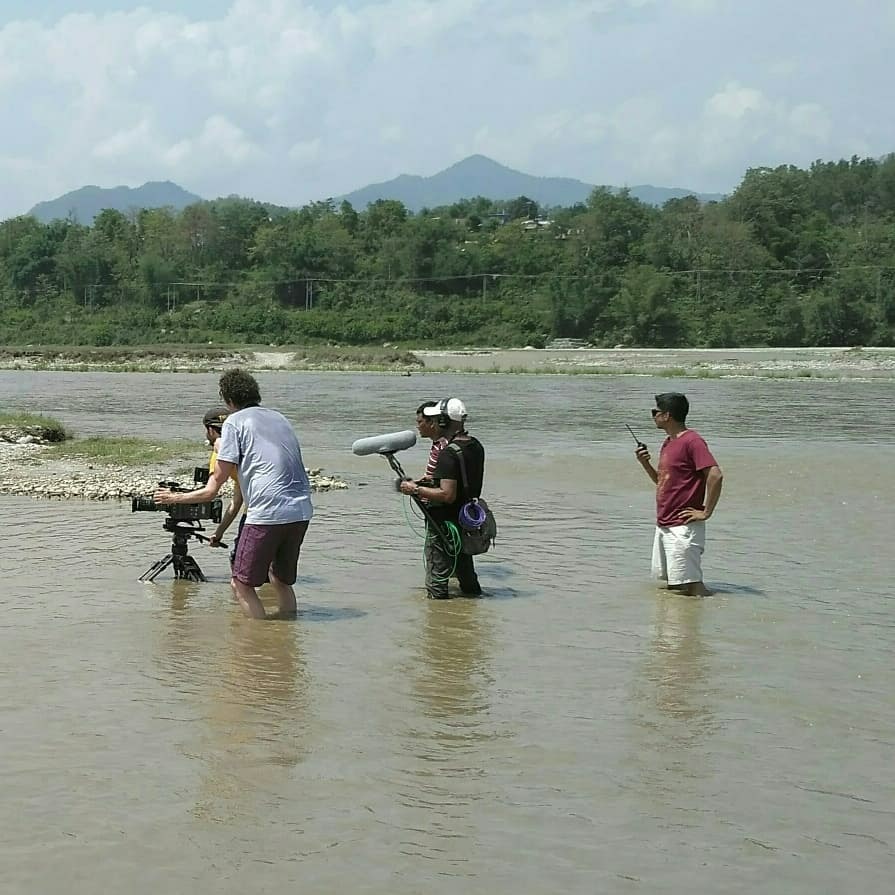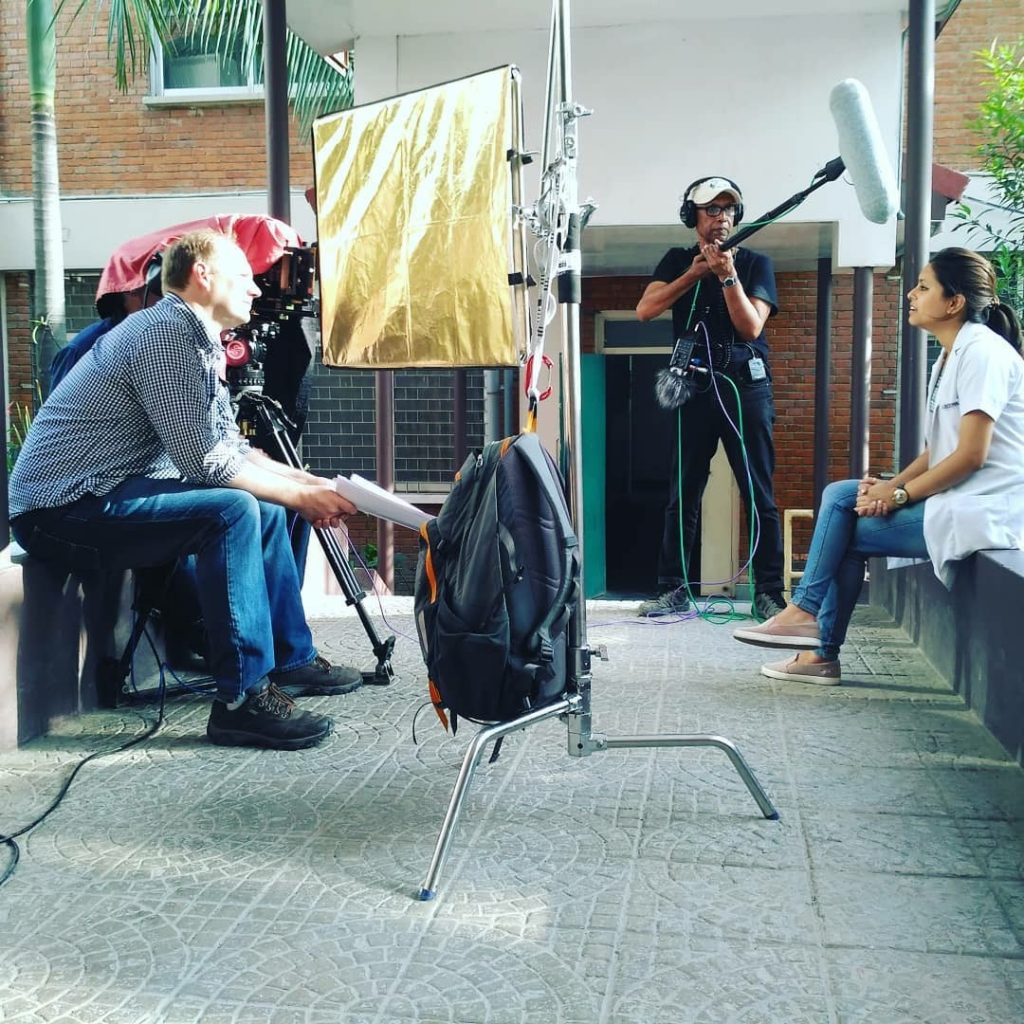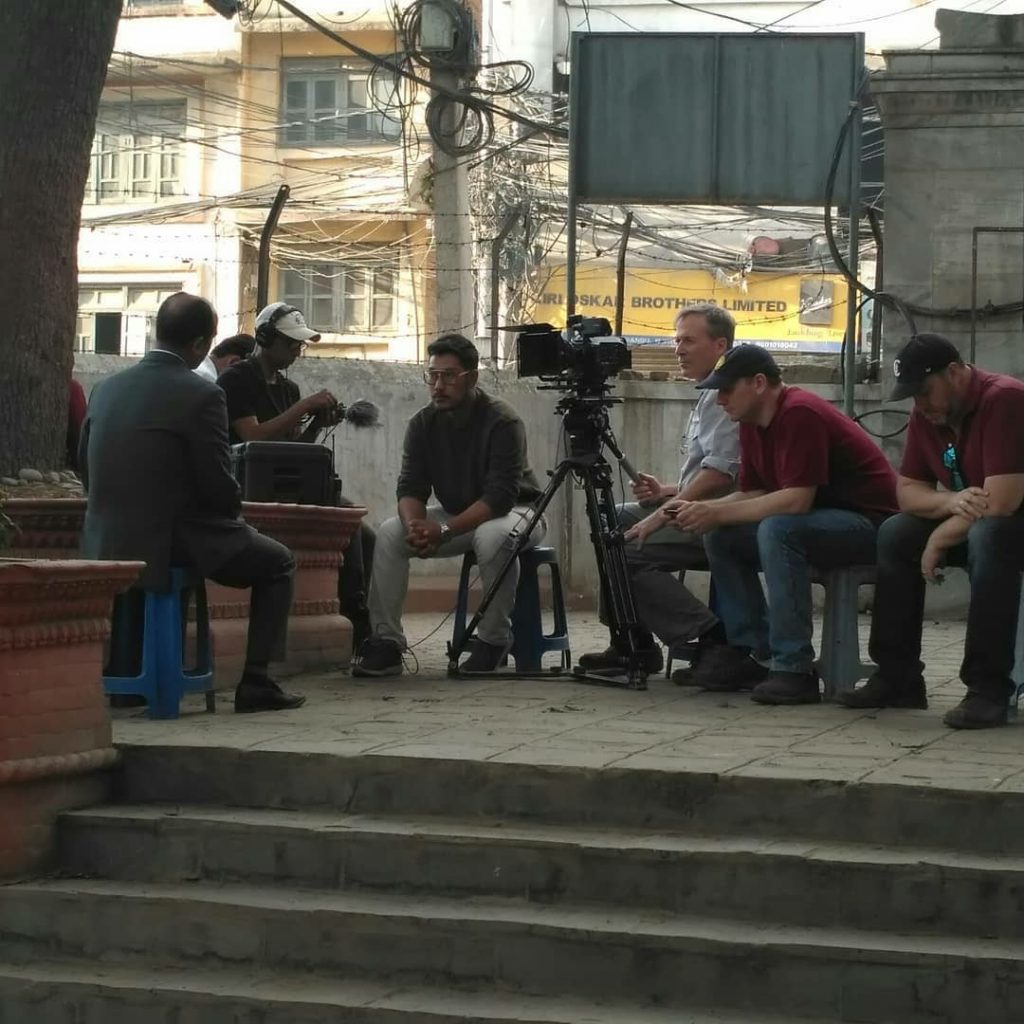

Filming for Lion’s Club – Pieter Miller from Image Base

At Kathmandu Films, we strive to provide the best filming services in Nepal and that sets us apart. We thrive in challenges and make a way through to get the best results. Whether it is days-long shoot or managing filming permits or talking to local people, we do it all and that is why our clients entrust us for their projects.

As of such a case, we had a chance to prove ourselves on an international platform again. Pieter Miller is a producer from Image base, Chicago based video, and event agency. He traveled to Nepal to film some of the projects the local Lions Club in Nepal were participating in. This was for Lions Club International, and a thrilling experience stocked for us in the future. We made plans and the shoot lasted for 8 days in total.  

The onset of filming journey: day 1

Inspection and Introduction

All the equipment had to be checked thoroughly by the Cinematographer himself and one of the specialists from the production company. After inspection, some more equipment was required. We had it delivered in time on the same day.


Understanding our location: day 2

  1. Koirala Lions Center for Ophthalmic Studies

It was May 6th, Sunday. The journey started from our hotel to BP KOIRALA LIONS CENTRE FOR OPHTHALMIC STUDIES. All the equipment were already loaded on the vehicle. We started early in the morning at 7. We reached the hospital and was welcomed by the Director Mr. Anand Sharma. He briefed the crew about the institute and after that, we went to scout the premises.

While half of the crew were out scouting, the other half were setting up the equipment for the interview. So when the scouting was over, we started the interview. There were 5 interviews in total. After the interview, we started shooting V-rolls. And that was it for the day.


Interviewing students and doctors: day 3

  1. Koirala Lions Center for Ophthalmic Studies Rural Clinic

The next morning, we headed to the Insitute for the Rural clinic team. We traveled with the team to Nepal-Korea Friendship Hospital, Bhaktapur. There, we got some interviews with the patient and the doctors who were running the rural clinic. After the shoot at the hospital, we headed for the town of Bhaktapur where Lions club had established an eye care center. There were children coming for inspection and diagnosis there. We shot some V-rolls and had interviews with students and the Doctor who was conducting the treatment.


Unfortunate weather and Gurkhali spirit: day 4

Travel to Gorkha and Interview with Engineers (2 Interviews)

Our day started early in the morning at 7, with all the luggage and equipment packed and ready to go. We made our way towards Gorkha, famous as the home to the brave troops of Gurkhali soldiers. However, we stopped to get some lunch in the daytime. As soon as we reached Gorkha, we checked into a hotel a. Since it wasn’t dark already, we decided to look around for a location to shoot the interviews.

Later, we found out that the hotel we had checked in earlier was owned by one of the founding members of Lions Club in Nepal and in Gorkha.  We were supposed to travel for 2 more hours off road for the next day. But unfortunately, we decided not to travel because of the poor condition of the roads and the weather. Luckily, we found a better option to film: the school.


A sweet gesture at work: day 5

School shooting interviews and V-rolls

The next day we got up at 7 in the morning and headed towards the school for filming. The students would not be there till 9 so we had a little time. We prepared the equipment and set it in place. We started interviewing the Lions from Gorkha. After the interviews, the first school bell rang. We started filming the classes. It was the usual: the students were studying what the teacher was teaching. After the V-roll we started interviewing students. When we were wrapping up, the school prepared a nice farewell program for us. The whole school was singing songs for us while the principal was handing us a small token of love. We spent the night in Gorkha.


Traveling back to Kathmandu: day 6

Travel Back to Kathmandu

Next day, we traveled back to Kathmandu. The weather was nice. The wind was cool. We took a much-needed rest on our way back.


An inspirational story: day 7

Mobility Cart Story

We are filming in the streets of Teku for the day. It was for a Mobility Cart story. Specifically, Chatra Bahadur Gurung’s story.

He received the mobility cart from Lion Ramchandra Dahal, who is an amazing guy in himself. Gurung narrates his story of how he received the three-wheeled cart that changed his life, which was very inspiring. After the shoot, we said goodbye to Chatra Bahadur Gurung and head back to the hotel.


Done with filming for the project: day 8

Travel to Dhulikhel Lions Club Global Action Team Meeting

We started our day early in the morning, heading towards Dhulikhel where the Global action team meeting was being held. We filmed the whole event and interviewed some of the members of the Global Action team. After the shoot, we headed straight to the airport to drop our clients off.

The whole experience was mesmerizing. Working with international clients always teaches us something we never knew before. It was amazing to work with such a talented crew and to also prove our worth. Even our clients agree on that.

Recce to Mustang | FIXER IN NEPAL

Mustang was once an isolated and independent Tibetan kingdom. Today, it is an exotic place in Nepal that still retains a mystical reputation. In an unabated search for villages that still performed the sky burial funerals, we discovered a lot throughout the journey.

Sky burial is an ancient Tibetan funeral which has an unusual yet unique process. The corpse is first dismembered. Then it is exposed on an elevated location, as an offering for the sacred vultures.

Well, a sky burial is far from any other conventional kind of ‘burial’. Only a few cultures observe it — for different reasons and in different ways.

Sky burial can come off as shocking to a lot of people; after all, it’s dead bodies being chopped and offered to vultures. But the philosophy and values behind this ritual are simply beautiful and virtuous. “If your spirit has left your body and it could nourish another creature, then it should.”


The onset of our journey

It started with a short flight to Pokhara, from where we drove for more than 10 hours to Jomsom.
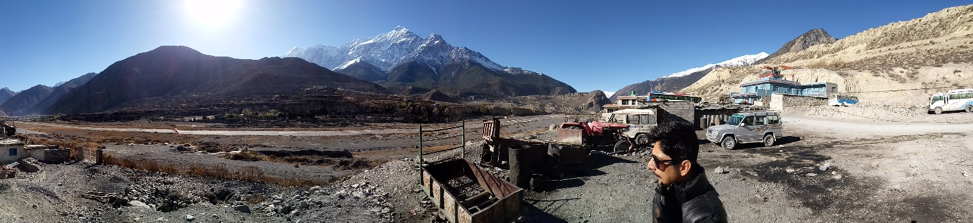
Jomsom is one of the biggest cities in Mustang district, well known for its relentless winds. Connecting Lower Mustang with the Upper, it’s also one of the most popular trekking destinations in Nepal. It’s mostly visited by the majority of people going to the temple of Muktinath as well.

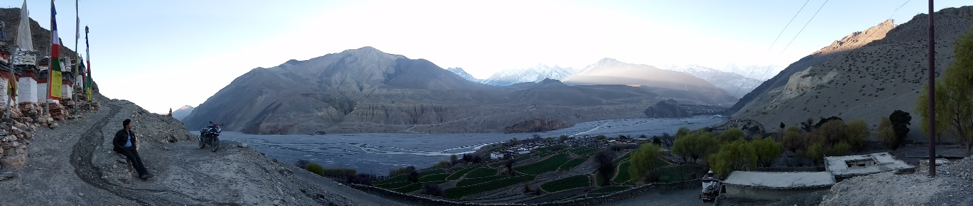
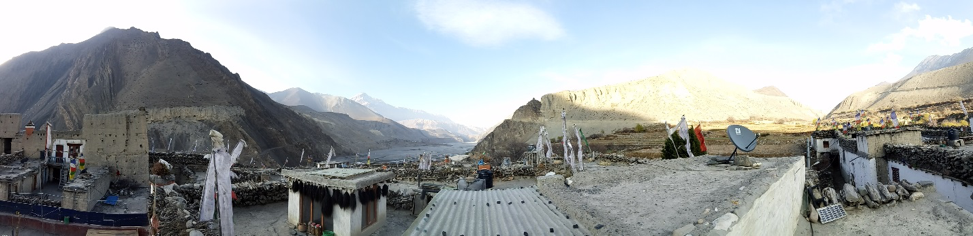
The village close to Jomsom is Kagbeni, which sits at the bottom of Muktinath valley. Kagbeni is famous for people, from all around the country, visiting to perform post-funeral rituals. Yet, this village still has not seen any sky burial for more than a decade.

We then walked for about 45 minutes, crossing the Kali Gandaki river to come upon a small village named Tiri. There we met Chhamba Dukta in Gonpa Gong. He is a Lama who performs sky burials, originally in his village in Dolpa, and in Mustang. He told us that it has been around 10 years since any sky burial. The villagers have settled for easier burning funerals, rather than difficult sky burials.

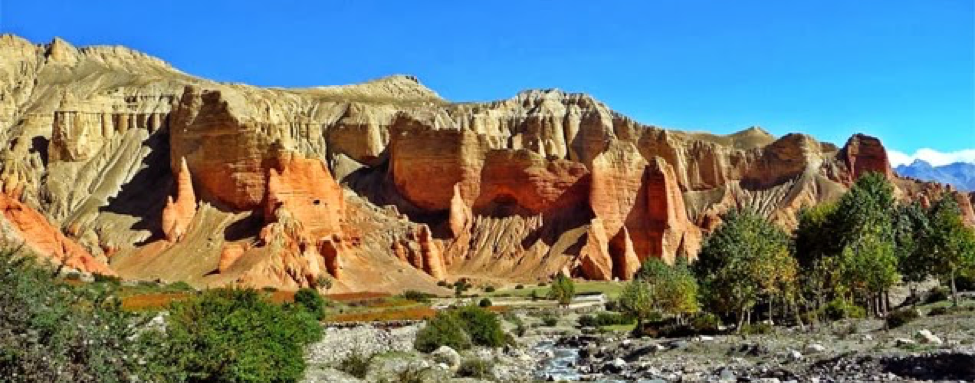
On his reference, our team headed towards a village, Dhamkar, in Upper Mustang. ‘Dham’ stands for hills and ‘Kar’ stands for red, meaning ‘Red Hills’ in the local language. The lower parts of Mustang have almost shunned the rituals of sky burial. This is mainly because of development of roadways and hiking trails.


The basis for sky burial

The very first thing to do after a person dies is to determine the method for their funeral. Usually, a high priest looks into the time of birth and death to find out what sign the person is. He determines one of the five signs: earth, water, air, sky, and fire through basic astrology. After ascertaining the sign, s/he is either buried, chopped and fed to the fishes, chopped and fed to the vultures or burned respectively.


What exactly happens in a sky burial?

After a Lama determines the process, the body is first tied up and he begins to recite the necessary prayers. Family members join along, beating double-sided drums and chanting prayers. They offer their condolences to the deceased by offering Khada, a religious cloth for farewell. Then, the priest goes around the body thrice, and it’s carried to a place that is specially allocated for the funeral.

Once there, the body breakers chop the body into precise pieces. The tip of the fingers containing the nails are considered to be poisonous to the vultures, so they are burnt along with the head. Once the offerings are ready, the Lama plays Damaru, an instrument crafted from the human knee. This is an invitation for the vultures to glide down and devour the offerings.
It is believed to be a bad omen if the vultures do not feed on the body. It implies that the body is too dirty to eat (ie, the person has sinned), or the rituals weren’t performed correctly. In such a case, the body has to be burnt, which is considered inauspicious, as it had to follow two traditions.


Concepts behind sky burial

As described in the traditional Tibetan mythologies, sky burials signify a true act of compassion and charity. The body, which never again serves any purpose, is offered to the vultures to feed on as an alms for the sacred birds.

So, the idea at work here is that if a body that ideally serves no use can sustain some other creature, then why not? After all, it’s important to not waste any opportunity to help other living beings.

One of the other interesting concepts of sky burial revolves around the choice of the animal: the vultures.
A traditional Tibetan mythology indicates that once the vultures are old, they do not fall back to the earth when their time has come. Rather, they keep flying higher until they just disappear into the sky.

And that’s where the name comes from: Sky Burials!

This unique tradition of sky burials is slowly getting extinct, with lesser to none sky burials performed in a year throughout the country. Well, in Kathmandu Films, we believe that it is our duty to explore and document such an intimidating ritual. And to spread beautiful accounts as such to keep the originality and uniqueness of Nepal alive.


Film Production in Nepal Becomes More Than Just a Shoot

# Filming Humanity in Nepal | A Story of Collaboration, Culture and Real Impact

Some projects are about visuals.
Some are about storytelling.
And some stay with you long after the camera stops rolling.

At Kathmandu Films, we have been part of over 200 international productions as a trusted **fixer in Nepal and line producer in Nepal**, delivering complete **film production services in Nepal**. But every once in a while, a project comes along that reminds us why we do what we do.

This was one of those stories.


# A Journey Begins | International Filming in Nepal

It was January when an international production team arrived in Nepal to film a reality television series focused on global humanitarian efforts.

For many of them, it was their first time in Nepal.

For us at Kathmandu Films, it was another opportunity to provide **complete filming support in Nepal** — from logistics and location coordination to cultural guidance and on-ground production management.

But what unfolded over the next few days was far more than a typical production.


# Into the Heart of Nepal | Beyond Kathmandu

Leaving behind the busy streets of Kathmandu, the journey took us into the hills — toward Sindhupalchowk and Nuwakot.

These are not just locations.
They are places that carry memories of resilience.

Following the devastating earthquake, these regions became symbols of rebuilding and hope.

For the production team, this meant:

• Traveling through challenging terrain
• Managing tight schedules across multiple locations
• Coordinating with local communities
• Capturing real stories in real environments

This is where experienced **Nepal production services and fixer support** become essential.


# Filming Real Stories | Where Emotion Meets Reality

The camera was not just recording scenes — it was capturing lives.

We filmed:

• Schools being rebuilt from the ground up
• Students returning to classrooms
• Teachers continuing their work with determination
• Communities coming together to rebuild what was lost

Each frame carried emotion.

Each interview carried truth.

This is the essence of **documentary filming in Nepal** — raw, authentic, and deeply human.


# The Warmth of Nepal | A Culture That Welcomes

One of the most unforgettable parts of the journey was the way local communities welcomed the crew.

At every location:

• The team was greeted with flowers and garlands
• Cultural programs were organized
• Children smiled with curiosity and excitement

Despite language differences, there was a natural connection — a reminder that storytelling goes beyond words.

This cultural openness is what makes Nepal unique for **international filming and production**.


# A Global Effort in a Local Setting

At one school in Nuwakot, something remarkable stood out.

Volunteers from more than 28 countries were working side by side to rebuild a school.

Different languages, different backgrounds —
but one shared purpose.

Seeing them wearing traditional Nepali attire during the handover ceremony was a powerful moment — a blend of global effort and local identity.

Capturing this required more than technical skill.
It required understanding the moment.


# The Reality of Filming in Nepal

Filming in Nepal is rewarding — but it is never without challenges.

• Weather conditions can change quickly
• Locations may be remote and difficult to access
• Schedules often require flexibility
• Cultural sensitivity is essential

With strong **line production Nepal and fixer in Nepal services**, these challenges become manageable.

At Kathmandu Films, we ensure that every production runs smoothly, no matter how complex the environment.


# More Than Production | A Meaningful Experience

By the end of the journey, this was no longer just a filming project.

It became:

• A story of resilience
• A connection between cultures
• A shared experience between filmmakers and communities

For us, it reinforced what we believe:

**Film production in Nepal is not just about capturing images — it is about capturing meaning.**


# Why International Productions Choose Nepal

Nepal offers something rare:

• Visual diversity from Himalayas to Terai
• Deep cultural storytelling
• Real human experiences
• Cost-effective production solutions

With professional support from Kathmandu Films, international clients gain access to:

• Fixer in Nepal and Kathmandu
• Line production Nepal
• Filming permits in Nepal
• Location scouting Nepal
• Nepal film crew and crew hire
• Full Nepal production services


# Final Thought | Let’s Tell Stories That Matter

Some stories need the Himalayas.
Some need culture.
And some need truth.

Nepal offers all three.

Kathmandu Films is here to help you bring those stories to life with professionalism, reliability, and deep local expertise.


## Contact Kathmandu Films

Email: info@kathmandufilms.com
Phone: +977 9801012311