

Recce to Mustang

Mustang was once an isolated and independent Tibetan kingdom. Today, it is an exotic place in Nepal that still retains a mystical reputation. In an unabated search for villages that still performed the sky burial funerals, we discovered a lot throughout the journey.

Sky burial is an ancient Tibetan funeral which has an unusual yet unique process. The corpse is first dismembered. Then it is exposed on an elevated location, as an offering for the sacred vultures.

Well, a sky burial is far from any other conventional kind of ‘burial’. Only a few cultures observe it — for different reasons and in different ways.

Sky burial can come off as shocking to a lot of people; after all, it’s dead bodies being chopped and offered to vultures. But the philosophy and values behind this ritual are simply beautiful and virtuous. “If your spirit has left your body and it could nourish another creature, then it should.”
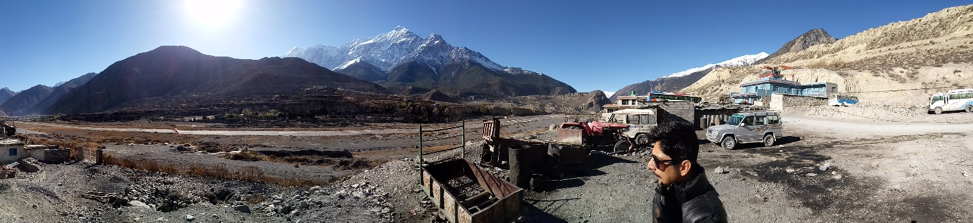
 

The onset of our journey

It started with a short flight to Pokhara, from where we drove for more than 10 hours to Jomsom.
Jomsom is one of the biggest cities in Mustang district, well known for its relentless winds. Connecting Lower Mustang with the Upper, it’s also one of the most popular trekking destinations in Nepal. It’s mostly visited by the majority of people going to the temple of Muktinath as well.

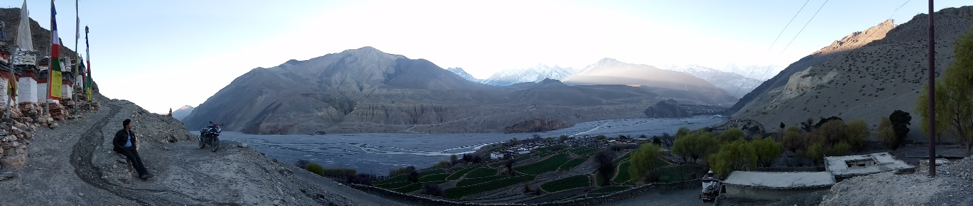
The village close to Jomsom is Kagbeni, which sits at the bottom of Muktinath valley. Kagbeni is famous for people, from all around the country, visiting to perform post-funeral rituals. Yet, this village still has not seen any sky burial for more than a decade.

We then walked for about 45 minutes, crossing the Kali Gandaki river to come upon a small village named Tiri. There we met Chhamba Dukta in Gonpa Gong. He is a Lama who performs sky burials, originally in his village in Dolpa, and in Mustang. He told us that it has been around 10 years since any sky burial. The villagers have settled for easier burning funerals, rather than difficult sky burials.

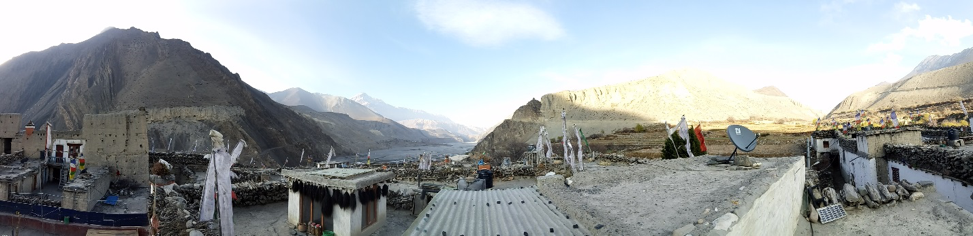
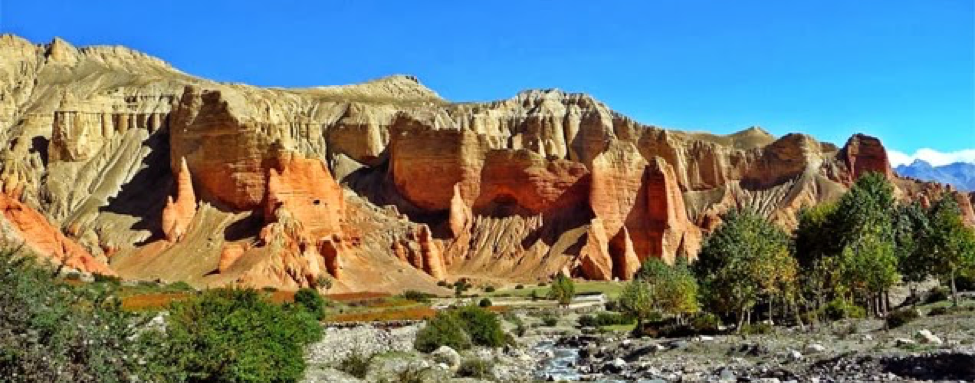
On his reference, our team headed towards a village, Dhamkar, in Upper Mustang. ‘Dham’ stands for hills and ‘Kar’ stands for red, meaning ‘Red Hills’ in the local language. The lower parts of Mustang have almost shunned the rituals of sky burial. This is mainly because of development of roadways and hiking trails.


The basis for sky burial

The very first thing to do after a person dies is to determine the method for their funeral. Usually, a high priest looks into the time of birth and death to find out what sign the person is. He determines one of the five signs: earth, water, air, sky, and fire through basic astrology. After ascertaining the sign, s/he is either buried, chopped and fed to the fishes, chopped and fed to the vultures or burned respectively.
 

What exactly happens in a sky burial?

After a Lama determines the process, the body is first tied up and he begins to recite the necessary prayers. Family members join along, beating double-sided drums and chanting prayers. They offer their condolences to the deceased by offering Khada, a religious cloth for farewell. Then, the priest goes around the body thrice, and it’s carried to a place that is specially allocated for the funeral.

Once there, the body breakers chop the body into precise pieces. The tip of the fingers containing the nails are considered to be poisonous to the vultures, so they are burnt along with the head. Once the offerings are ready, the Lama plays Damaru, an instrument crafted from the human knee. This is an invitation for the vultures to glide down and devour the offerings.
It is believed to be a bad omen if the vultures do not feed on the body. It implies that the body is too dirty to eat (ie, the person has sinned), or the rituals weren’t performed correctly. In such a case, the body has to be burnt, which is considered inauspicious, as it had to follow two traditions.


Concepts behind sky burial

As described in the traditional Tibetan mythologies, sky burials signify a true act of compassion and charity. The body, which never again serves any purpose, is offered to the vultures to feed on as an alms for the sacred birds.

So, the idea at work here is that if a body that ideally serves no use can sustain some other creature, then why not? After all, it’s important to not waste any opportunity to help other living beings.

One of the other interesting concepts of sky burial revolves around the choice of the animal: the vultures.
A traditional Tibetan mythology indicates that once the vultures are old, they do not fall back to the earth when their time has come. Rather, they keep flying higher until they just disappear into the sky.

And that’s where the name comes from: Sky Burials!

This unique tradition of sky burials is slowly getting extinct, with lesser to none sky burials performed in a year throughout the country. Well, in Kathmandu Films, we believe that it is our duty to explore and document such an intimidating ritual. And to spread beautiful accounts as such to keep the originality and uniqueness of Nepal alive.


Travel Essentials: Nepal (Part II)

Crime

Nepal is one of the world’s more crime-free countries, but it would be unwise not to take a few simple precautions.

The main concern is petty theft. Store valuables in your hotel safe, close windows or grilles at night in cities to deter “fishing”, and use a money belt or pouch around your neck. Some public bus routes have reputations for baggage theft. Pickpockets (often street children) operate in crowded urban areas, especially during festivals; be vigilant.

If you’re robbed, report it as soon as possible to the police headquarters of the district in which the robbery occurred. Policemen are apt to be friendly if not of much help. For insurance purposes, go to the Interpol Section of the police headquarters in Durbar Square, Kathmandu, to fill in a report; you’ll need a copy of it to claim from your insurer once back home. Bring a photocopy of your passport and your Nepali visa, together with two passport photos.

Violent crime is rare. An occasional concern is a certain amount of hooliganism or sexual aggression in the Kathmandu tourist bars, and late-night muggings do sometimes occur. In addition, there have been a couple of well-publicized armed robberies and sex murders in the national parks on the edge of the Kathmandu Valley. A few Western women have been raped, but most problems come about within relationships with Nepali men – trekking or rafting guides, for instance – not due to an attack by strangers. The countryside, generally, is very safe, though there is a small risk of attack by bandits on remote trekking trails. In the Terai region, there are a number of armed Madhesi groups, but tourists are not targets and you are unlikely to be affected much beyond the odd delayed bus, roadblock or bandh.

There are several ways to get on the wrong side of the law. Smuggling is the usual cause of serious trouble – if you get caught with commercial quantities of either drugs or gold you’ll be looking at a more or less automatic five to twenty years in prison.

In Nepal, where government servants are poorly paid, a little bakshish sometimes greases the wheels. Nepali police don’t bust tourists simply in order to get bribes, but if you’re accused of something it might not hurt to make an offer, in an extremely careful, euphemistic and undeniable way. This shouldn’t be necessary if you’re the victim of a crime, although you may feel like offering a “reward”.

The worst trouble you’re likely to run into is one of Nepal’s all-too-common civil disturbances. Political parties, student organizations and anyone else with a gripe may call a chakka jam (traffic halt) or bandh (general strike). In either case, most shops pull down their shutters as well, and vehicles stay off the roads to avoid having their windows smashed. Demonstrations sometimes involve rock-throwing, tear gas and laathis (Asian-style police batons), but you’d have to go out of your way to get mixed up in this.


Drugs

Drugs are illegal in Nepal, but it is impossible to walk through Thamel or any of the other tourist hotspots without being approached by a dealer offering hash. It would be incredibly stupid to go through customs with illegal drugs, but discreet possession inside the country carries relatively little risk. While the drug dealers are often shady characters, they are not generally informants.


Electricity

Power comes at 220 volts/50 cycles per second when you can get it: lengthy power cuts (“load shedding”) are a daily occurrence. Smarter hotels and restaurants have backup generators. Tourist guest houses usually offer sockets that accept almost any kind of pin, but the European standard two-pin is the most common.


Emergencies

Dial 100 for the police. Hospitals and other organizations have their own telephone numbers for an ambulance, but get a Nepali-speaker to do the talking. Registering with your embassy can speed things up in the event of an emergency.


Entry regulations

All foreign nationals except Indians need a visa to enter Nepal. These are free (for 30 days) for nationals of other South Asian Area Regional Cooperation (SAARC) countries: Pakistan, Bhutan, and Bangladesh. All other nationals have to pay for them. Tourist visas are issued on arrival at Kathmandu airport and official overland entry points. At the former, queues can be long, so you may prefer to get one in advance from a Nepali embassy or consulate in your own country. Otherwise, have a passport-size photo at the ready. At the airport, you can pay the visa fee in US dollars, euros, pound sterling or other major foreign currencies. At overland entry points, officials tend to demand US dollars or Nepali rupees.

The fee structure at the time of writing was $25 for 15 days, $40 for 30 days and $100 for 90 days; all are multiple-entry visas. Fees may change without warning, however, so double-check at immi.gov.np before setting out. Tourist visas can be extended up to a maximum of 150 days in a calendar year: an extension of 15 days or less costs $30; for more than 15 days, it costs an extra $2 per day. Extensions are granted only at the Kathmandu or Pokhara Department of Immigration offices. Submit your passport and one passport-size photo with your application. A transit visa, valid for 24 hours and non-extendable, costs $5.

Don’t overstay more than a couple of days, and don’t tamper with your visa – tourists have been fined and even jailed for these seemingly minor infractions.

It is no longer necessary to have a trekking permit to visit the most popular trekking regions, but you will need the TIMS card, which amounts to much the same thing. You’ll have to pay national park entry fees for the Annapurna, Everest, and Langtang areas. A handful of remote regions are still restricted and require permits to enter.

It’s worth noting, too, that a few sites in the Kathmandu Valley, including the entire city of Bhaktapur, charge entry fees.

Customs officers are fairly lax on entry, but checks are more thorough on departure, and it is illegal to export objects over 100 years old (see Ethical shopping).


Travel Essentials: Nepal (Part I)

Traveling to Nepal can be a rewarding experience if you know the right things to do. Nepal is a traveler’s paradise, combining golden temples, majestic mountain views, luscious green forests, charming lakes, and rich wildlife.

Like we said, it can be quite a hassle if you do not know the basic travel essentials in Nepal. There are many things to consider: the underdeveloped roads in most parts of the country, relevant unhygienic situations, the food that you may or may not eat in Nepal.

So, let’s cover the most important factors when traveling to Nepal — taking care of your children, the climate, and the cost of staying in Nepal.


Children

Kids always help break the ice with strangers, and Nepal can be a magical place for a child to visit. Arranging childcare is easy, and Nepalis generally love kids. However, some children (especially those with fair skin and blond hair) may be uncomfortable with the endless attention.

Parents will, of course, have to take extra precautions in the light of Nepal’s poor sanitation, street dogs, large crowds, heavy traffic, pollution, bright sun, rooftops, and steep slopes.

It may be hard to keep hands clean and gross stuff out of mouths, and you’ll have to keep a firm grip on small children while out and about. If your child comes down with diarrhea, keep them hydrated and topped up on salts – have oral rehydration formula at hands.

Naturally, you’ll want to plan the modest itinerary and travel in greater comfort with children than you might on your own. In tourist areas, it should be no problem finding food that kids will love to eat. Although, in other places, it might be more challenging. Baby food and disposable nappies/diapers are available in Kathmandu and Pokhara but are hard to come by elsewhere, especially in rural areas. Some toys and books can be bought in Nepal, but it’s better if you bring a supply of your own. Carry toddlers in a backpack or papoose – a stroller or pushchair will be virtually useless in Nepal.

Trekking with children is generally a wonderful experience, though it can be logistically awkward if they’re too old to ride in a backpack and too young to hike on their own (though mules or horses can often be arranged).


Climate

Nepal’s climate varies significantly through the year, with seasons showing themselves up very differently at different altitudes. The pre-monsoon period, generally very hot and humid at lower elevations, lasts from mid-April to early June. The monsoon season itself dominates the period between mid-June and mid-September when travel is difficult but not impossible. Autumn sees pleasant temperatures and dry weather, while winter is generally cool and clear.


Costs

Your money goes a long way in Nepal. Off the tourist routes, it can actually be hard to spend $30–40 a day, including food, transport, and accommodation. On the other hand, Kathmandu and some of the other tourist traps can burn a hole in your pocket faster than you might expect. Even so, it’s still possible for a frugal traveler to keep to $20 a day in the capital, although the figure can effortlessly balloon to $50 or more simply by choosing slightly nicer hotels and restaurants. If you like to travel in greater luxury, you should reckon on spending $60–80 or more per day, mainly depending on the standard of accommodation.

You’ll inevitably pay over the odds for things at first, and it may even feel as if people are charging you as much as they think they can get away with, but that’s hardly a market principle exclusive to Nepal. Bargain where appropriate, but don’t begrudge a few rupees to someone who has worked hard for them.

Many hotels (and most tourist restaurants) quote their prices exclusive of the 13 percent “government” tax (essentially a value-added tax) and charge another 10 percent service charge.

No matter how tight your budget, it would be foolish not to splurge now and then on some of the things that make Nepal unique: organized treks, rafting, biking and wildlife trips are relatively expensive but well worth it.


Filming in Nepal: History

History of Filming in Nepal

Even though Filming in Nepal does not have a very long history, the industry has its own place in the cultural heritage of this country. Most of the Nepali films use Bollywood-style songs and narratives and are shot on 16-millimeter film. In the film industry idiom, Kathmandu, the capital and the center of the Nepali-language film industry, is called Kollywood within Nepal (which is different than India’s Tamil-language film industry, Kollywood, based in Chennai).


The emergence of Nepali film industry

The making of Nepali films is said to have begun with D. B. Pariyar’s Satya Harishchandra, which was the first Nepali language film to be shot. It was produced from Kolkata, India, and was released on September 14, 1951. Aama was the first film produced in Nepal and was released on October 7, 1964. It was produced by the Information Department of His Majesty’s Government of Nepal (now Government of Nepal), directed by Hira Singh Khatri with Shiva Shankar Manandhar and Bhuwan Thapa as the lead actors, who are also regarded as the first actors in the history of the Nepali film industry. This was the most important event in history of filming in Nepal.


The first private banner film

The first film to be produced under a private banner was Maitighar, which was released at the end of 1966 by Sumananjali Films Pvt. Ltd. Although being a Nepali movie, it had many Indians contributing toward the making of the film. Mala Sinha had the lead role, along with CP Lohani. It had special appearances of Sunil Dutt and comedian Rajendra Nath. It was directed by BS Thapa and music composed by Jaidev, a veteran music maestro. It had established Indian singers like Lata Mangeshkar, Asha Bhosle, Usha Mangeshkar, and Manna Dey playback-singing along with the household names of Nepali music, like Narayan Gopal, Prem Dhoj Pradhan, CP Lohani, and Aruna Lama.


Royal Nepal Film Corporation (1971)

The government later established the Royal Nepal Film Corporation in 1971 which produced Mann Ko Bandh with Prakash Thapa as the director of the film and Nati Kaji and Shiva Shankar as the music composers. Amber Gurung scored the background music. The film premiered in 1973 in Kathmandu. It was followed by Kumari (the first color Nepali film) in 1977, Sindoor in 1980, and Jeevan Rekha in series. The success of these films opened up an avenue for private parties to enter into filmmaking as an industrial endeavor.


Fall of the industry

The Nepali film industry started to fall down during the Maoist revolution. Fewer films were made with low budgets and even lower performance during that period which resulted in even smaller audiences. In the later years of the conflict, the production and release of Nepali films had come to a standstill with many actors and filmmakers leaving the country in search of work because there were no films being made.


The rise of the industry

However, with Maoists coming into mainstream politics by 2006, the Nepali film industry started to develop. Now, more and more films are being made and released. The production companies and people in the industry are enthusiastic about the country’s new situation. Also, the quality of the films being produced is improving, however, in comparison to Bollywood, it still lags far behind and the competition is tough with maximum youths preferring Bollywood and Hollywood to Kollywood. Nevertheless, the production of movies like Loot, Highway, Apabad, etc. that are based on contemporary subjects have good content and presentation. Well, the future of Nepali Film Industry looks prosperous.


Want to know more contact us if you require services for Filming in Nepal


Celebrity Charity Exposed

Kathmandu Films Collaboration

Kathmandu Films begins with the promise of rising to the occasion and delivering the best service to our clients. We value our clients the most and we are very conscious of the fact that building a relationship is the key to success and that can only be achieved through transparent and professional conduct. Kathmandu Films has been providing total film support and service in Nepal since 2007 and we take pride in our flexibility to work to suit all kinds of budget. Line Production, Fixing, Translation, Research, Location, Logistic support and Investigation among others make us a complete and one stop filming service provider in Nepal.

This January, we collaborated with Lulu Sanders from LA, USA for filming her reality TV show called ‘Celebrity Charity Exposed’, which was majorly focused on showing what celebrities are doing for charities. The Nepal edition showcased one such celebrity, Petra Nemcova, who lost her fiancé in a tsunami and founded ‘Happy Hearts Fund’, with the aim to help natural calamity-inflicted people all around the world. Happy Hearts Fund, in collaboration with All Hands Volunteers, has been building schools all around Nepal, after the country was shaken and devastated by the major earthquake of April 2015.

We traveled to Sindhupalchowk and Nuwakot, the most affected districts, where the schools are still being constructed, some being on the verge of completion. The shoot was a total of 3 days, with constant travel to different schools filming the progress and interviewing the students and the teachers. Every school greeted the gang of foreigners with garlands and flowers, but so were all the filming crew respected and greeted, showing the hospitality that Nepal is so eminent about. Various musical programs and games entertained the guests who came all the way and have been constantly helping to build Nepal and make it better.

Something that really fascinated all of us was what we saw at Shree Bachchhala Devi School in Nuwakot, where volunteers from over 28 countries have been volunteering to build the school for around 3 months and were wearing traditional Dhaka Topi, during the School Handover Program. Overall, it was a great experience for the filming team as well as everyone who were part of the short but fruitful trip. Kathmandu Films prides itself to be a part of such a wonderful filming experience and take Nepalese cinematics around the world, spreading a positive message. Kathmandu Films welcomes you all to come to Nepal and work with us. Let us fix and film together because your satisfaction is our honor.