Nepal has rapidly become one of the most attractive filming destinations for international productions. With its extraordinary Himalayan landscapes, ancient cultural heritage, remote mountain regions, dense jungles, spiritual locations, and cost-effective production environment, Nepal offers filmmakers the ability to capture multiple cinematic worlds within a single country.
From feature films and documentaries to OTT productions, commercials, travel series, and adventure content, Nepal provides unique visual opportunities that are difficult to replicate anywhere else in the world.
However, filming in Nepal requires proper planning, permit coordination, logistical preparation, and experienced local support. Understanding the production process is essential for ensuring efficient operations and successful execution.
This guide explains everything international filmmakers need to know about filming in Nepal.
Why International Productions Choose Nepal
Nepal offers one of the most visually diverse filming environments in Asia. Within relatively short travel distances, productions can access Himalayan peaks, ancient heritage cities, Buddhist monasteries, desert-like mountain terrain, wildlife reserves, rivers, lakes, forests, and traditional villages.
This diversity allows productions to achieve high cinematic production value while reducing the need for multi-country shoots and complicated international logistics.
Some of Nepal’s most popular filming regions include:
Everest Region for high-altitude mountain cinematography
Upper Mustang for Tibetan-style desert landscapes
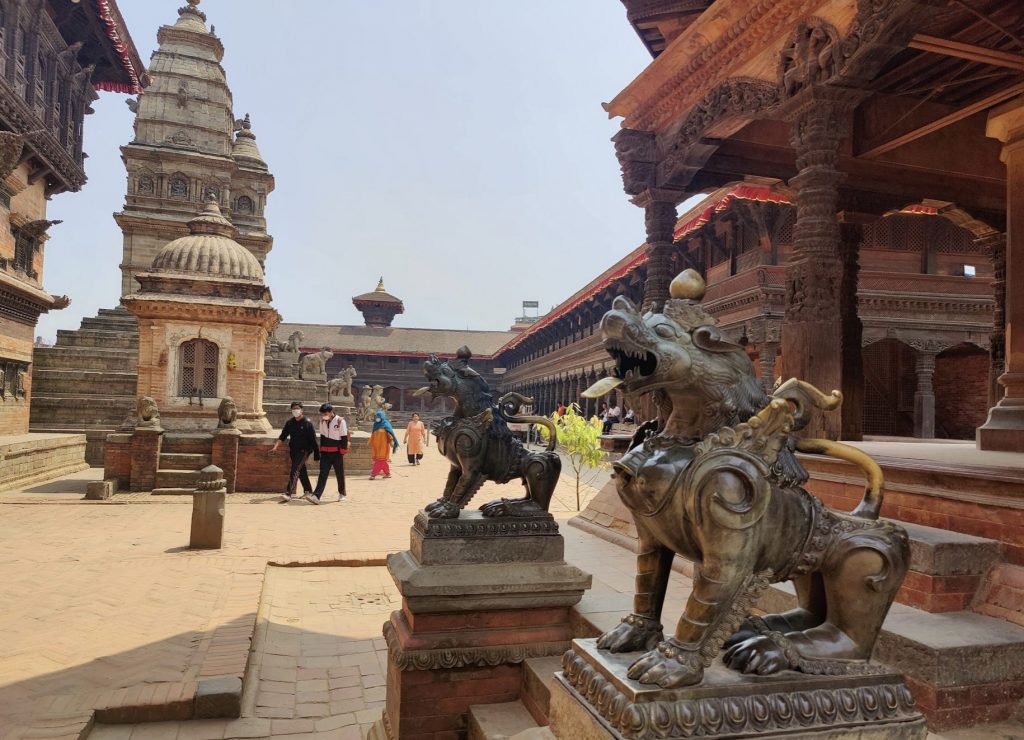
Kathmandu Valley for heritage architecture and urban culture
Pokhara for lakeside Himalayan visuals
Chitwan National Park for wildlife and jungle filming
Lumbini for spiritual and Buddhist storytelling
Dolpo and remote Himalayan areas for untouched cinematic landscapes
In addition to its visual diversity, Nepal also offers competitive production costs, experienced local crews, and growing infrastructure for international productions.
Filming Permits in Nepal
International productions filming in Nepal require official permits issued through the Ministry of Communication and Information Technology and related government authorities depending on the shooting location.
Permit coordination is one of the most important parts of pre-production planning.
Required Documents for Filming Permits
Most international productions are required to submit:
Project synopsis
Crew passport copies
Shooting schedule
Travel itinerary
Equipment list
Final filming locations
Drone details if applicable
Incomplete documentation can delay approvals, especially for remote or restricted areas.
Permit Processing Time
Standard filming permits in Nepal are generally processed within 5 to 7 working days.
However, filming in restricted or sensitive regions may require additional clearance and longer processing times, particularly in:
Upper Mustang
Border regions near Tibet/China
National parks and conservation areas
Remote Himalayan regions
Drone filming permissions may also require separate approvals depending on the production scale and location.
Early preparation is highly recommended to avoid operational delays.
Choosing the Right Filming Locations in Nepal
Location selection directly impacts production budget, logistics, crew movement, transportation planning, and shooting schedules.
Kathmandu Valley
Kathmandu offers a combination of ancient heritage architecture, temples, monasteries, traditional markets, narrow alleyways, and vibrant urban culture. It is one of the most production-friendly regions in Nepal due to its infrastructure, crew availability, and accessibility.
Pokhara
Pokhara is ideal for productions seeking cinematic Himalayan backdrops with relatively easy logistics. The region combines lakes, hills, adventure tourism environments, and panoramic mountain views.
Everest Region
The Everest region delivers some of the world’s most dramatic mountain cinematography. However, filming here requires detailed altitude planning, acclimatization schedules, helicopter logistics, and weather contingency management.
Upper Mustang
Mustang offers visually striking desert-like Himalayan terrain often compared to Tibet. Productions filming here require restricted area permits and specialized logistical planning.
Chitwan National Park
Chitwan provides dense jungle environments, river systems, safari landscapes, and wildlife cinematography opportunities. Additional permissions are required for filming inside protected areas.
Remote Himalayan Regions
Regions such as Dolpo, Manang, and remote mountain districts provide extraordinary cinematic value but require experienced expedition planning and logistical coordination.
Production Budget and Cost Considerations
Nepal is generally considered a cost-effective filming destination compared to many international production markets. However, costs can vary significantly depending on location, altitude, transportation requirements, and production scale.
Major Production Cost Factors Include:
Government permits and filming fees
Local crew and fixer services
Equipment rental or import costs
Domestic flights and helicopter transport
Accommodation and catering
Transportation and logistics
Insurance and medical preparedness
Security and safety planning
Productions operating in remote Himalayan regions typically require larger logistical budgets due to limited infrastructure and transportation complexity.
Why a Local Fixer and Line Producer is Essential
Working with an experienced local fixer or line production company is critical for successful filming in Nepal.
International productions often face operational challenges related to permits, transportation, weather conditions, crew coordination, language barriers, remote access, and government procedures.
An experienced Nepal line production partner helps manage:
Permit processing
Government coordination
Location scouting
Crew hiring
Equipment sourcing
Transport logistics
Accommodation management
Customs coordination
Emergency support
On-ground production management
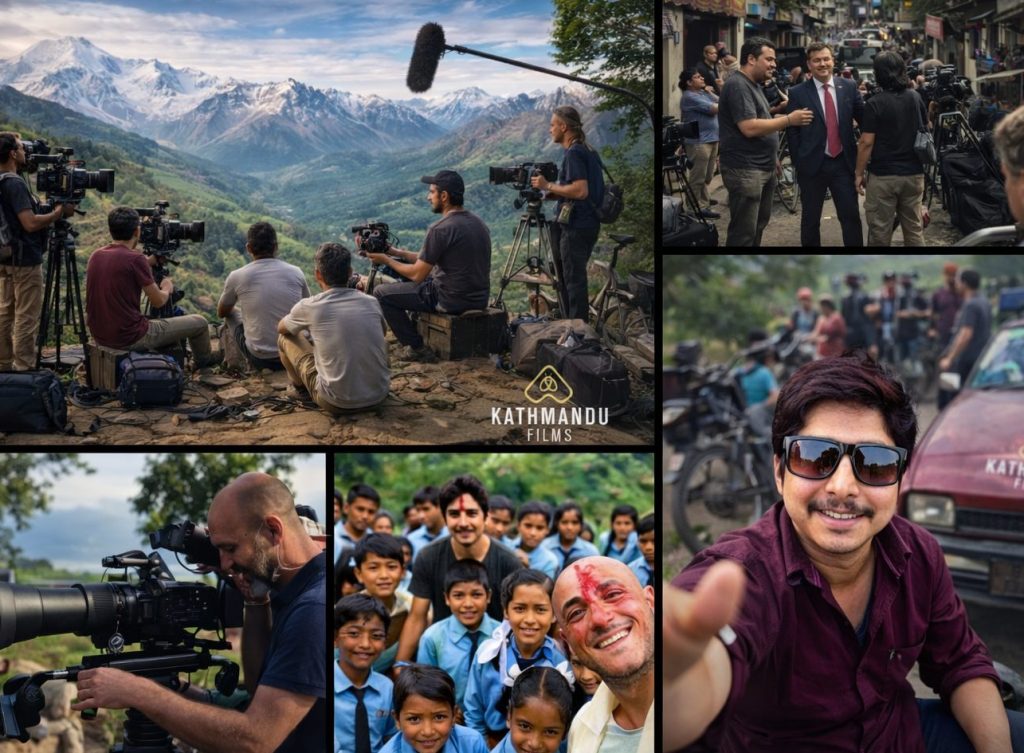
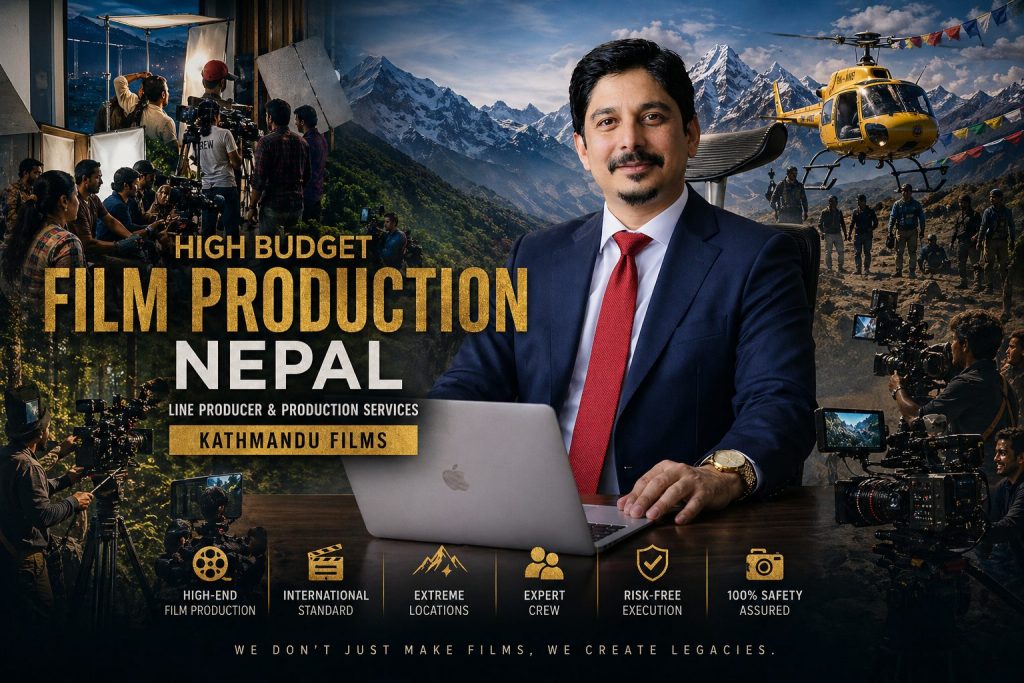
At Kathmandu Films, we provide complete line production and fixing services for international productions filming across Nepal, including remote mountain and high-altitude shoots.
Equipment and Production Logistics in Nepal
Nepal offers a growing range of production equipment and technical services locally, especially within Kathmandu.
Available Local Resources Include:
Camera support equipment
Lighting packages
Grip equipment
Production vehicles
Local crew support
Drone operators
Generators and field logistics
For large-scale productions requiring high-end cinema systems or specialized equipment, international import coordination may still be necessary.
Logistical Challenges to Consider
Remote filming in Nepal can involve:
Limited road access
Weather-dependent mountain flights
Power supply limitations
Internet connectivity issues
Altitude-related crew management
Changing weather conditions
Professional contingency planning is essential for maintaining production schedules and avoiding delays.
Best Time to Film in Nepal
Weather conditions significantly affect filming quality and logistics in Nepal.
Recommended Filming Seasons
October to December
Clear skies
Excellent mountain visibility
Stable weather conditions
Strong natural light
March to May
Comfortable temperatures
Good filming conditions
Beautiful seasonal landscapes
Flowering Himalayan regions
Seasons to Avoid
Monsoon season from June to September due to heavy rainfall, landslides, and limited visibility.
Peak winter in high-altitude regions due to extreme cold, snow blockage, and transportation challenges.
Cultural and Operational Considerations
Nepal is culturally rich and deeply traditional. Productions filming in Nepal should operate respectfully and professionally within local communities.
Important considerations include:
Respecting religious sites and ceremonies
Obtaining permission before filming individuals
Following local customs and community expectations
Coordinating with local authorities when required
Using experienced local coordinators for cultural guidance
Positive local relationships can significantly improve production efficiency and community cooperation during shoots.
Safety and Risk Management
Filming in Nepal, especially in mountain regions, requires strong safety planning.
Common production risks include:
Altitude sickness
Rapid weather changes
Remote medical access
Transportation delays
Mountain aviation disruptions
Physical terrain challenges
International productions should ensure proper insurance coverage, medical preparedness, communication systems, and experienced field coordination teams.
Why Kathmandu Films Supports International Productions in Nepal
Kathmandu Films specializes in line production and fixing services for international film, television, documentary, and commercial productions throughout Nepal.
With extensive experience managing productions across Kathmandu, Everest, Mustang, Chitwan, Dolpo, and remote Himalayan regions, we help international crews operate safely, efficiently, and according to global production standards.
Our services include:
Filming permits and government approvals
Location scouting and management
Local crew coordination
Equipment sourcing
Transportation and accommodation
Drone permits
Remote expedition logistics
Customs and import coordination
On-ground production management
From pre-production planning to final shoot execution, our team supports productions across every stage of filming in Nepal.
Final Thoughts
Nepal offers one of the world’s most unique filming environments. Its combination of Himalayan landscapes, ancient culture, remote wilderness, and production affordability creates exceptional opportunities for international filmmakers.
Whether producing a feature film, documentary, streaming series, travel production, or commercial campaign, Nepal provides extraordinary cinematic value across multiple genres.
Successful filming in Nepal depends on proper planning, experienced local coordination, and strong logistical execution. With the right production support, Nepal can deliver world-class results for international productions of every scale.
If you are planning to film in Nepal, Kathmandu Films can help manage your production from pre-production through final delivery.
Contact: info@kathmandufilms.com