For international filmmakers seeking the dramatic beauty of the Himalayas without the operational challenges often associated with Tibet, Nepal has become one of the most strategic filming destinations in Asia. Combining cinematic landscapes, authentic Himalayan culture, flexible production systems, and cost-effective logistics, Nepal offers a powerful balance between creative vision and practical execution.
Today, many global producers, documentary teams, streaming platforms, and commercial productions are choosing Nepal as a filming alternative to Tibet because it provides similar visual aesthetics while allowing greater production flexibility, smoother logistics, and more efficient project management.
At Kathmandu Films, we support international productions across Nepal with complete line production and fixing services, helping crews execute complex shoots efficiently from pre-production to final delivery.
A Himalayan Landscape That Closely Resembles Tibet
Nepal delivers the same breathtaking high-altitude visuals that define Tibet. Regions such as Upper Mustang, Dolpo, Manang, and the Everest Region feature dramatic desert plateaus, deep valleys, snow-covered peaks, ancient monasteries, and remote Himalayan villages that closely resemble Tibetan landscapes.
For filmmakers, this creates the opportunity to capture authentic Himalayan visuals without many of the restrictions and logistical limitations often faced elsewhere.
Upper Mustang in particular has become highly attractive for productions looking to recreate Tibetan settings. The region’s arid terrain, medieval architecture, cave systems, Buddhist monasteries, and isolated mountain environment provide remarkable cinematic realism for feature films, documentaries, travel productions, and historical storytelling.
Nepal’s diverse geography also allows productions to capture multiple visual styles within a single country, reducing travel complexity and increasing production efficiency.
Production-Friendly Permits and Flexible Operations
One of Nepal’s biggest advantages for international productions is its relatively streamlined filming process. Compared to heavily restricted regions, Nepal offers a more transparent and production-friendly permitting system.
With proper documentation, including production synopsis, crew details, shooting schedules, and location plans, filming approvals are generally processed efficiently through the Ministry of Communication and Information Technology.
More importantly, productions operating in Nepal benefit from greater on-ground flexibility. Crews can adapt shooting schedules based on weather conditions, travel logistics, and creative requirements without excessive operational restrictions.
For high-altitude productions where weather and mountain conditions can change rapidly, this flexibility is extremely valuable.
Cost-Effective Production Without Sacrificing Quality
Budget control remains a major factor for international productions, especially for location-heavy shoots. Nepal provides significantly better production value compared to many high-altitude filming destinations.
Crew rates, accommodation, transport, local logistics, and operational expenses are generally more affordable, allowing producers to allocate more resources toward cinematography, additional shoot days, aerial filming, or extended location access.
This cost efficiency makes Nepal highly attractive for independent films, OTT productions, documentaries, branded campaigns, travel shows, and large-scale international shoots seeking maximum cinematic value within controlled budgets.
Strong Local Production Infrastructure
Over the past decade, Nepal has developed a reliable ecosystem for international film and television production. Kathmandu now serves as a major operational hub with experienced line producers, fixers, production coordinators, technical crews, equipment suppliers, transportation providers, and mountain logistics teams familiar with international production standards.
From remote Himalayan expeditions to urban shoots and commercial productions, Nepal offers complete production support services.
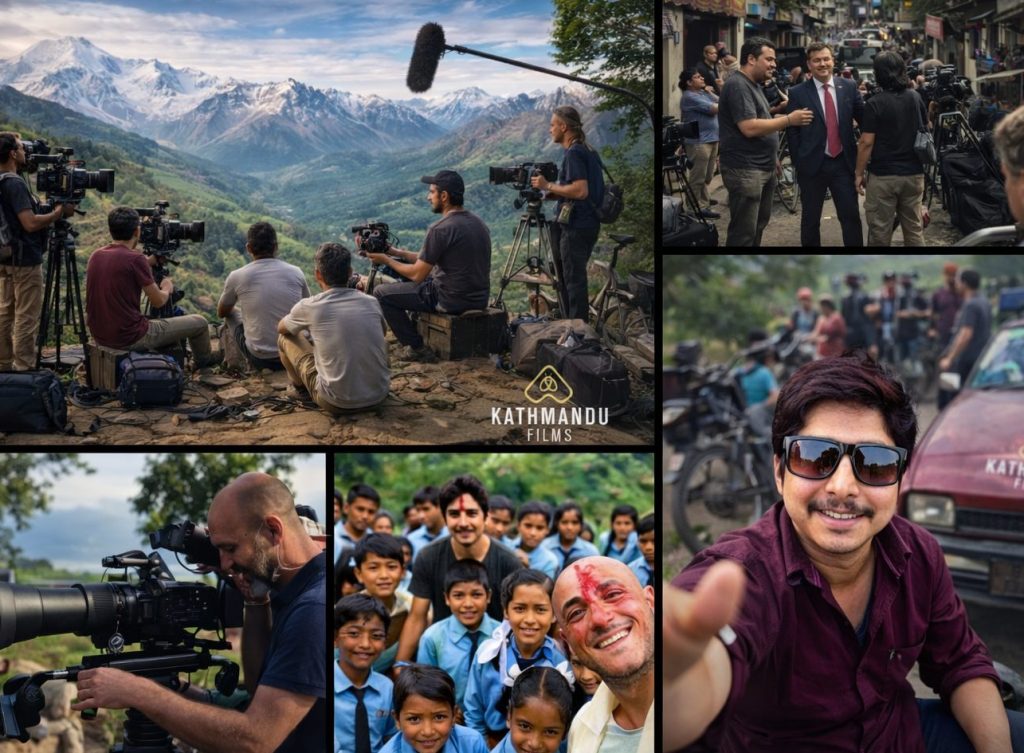
Kathmandu Films has worked with international broadcasters, streaming platforms, documentary teams, commercial brands, and global production companies, providing end-to-end support including:
Location scouting
Permit processing
Government coordination
Local crew hiring
Equipment sourcing
Drone permits
Transport and accommodation
High-altitude logistics
Remote expedition planning
This established infrastructure allows productions to operate efficiently even in challenging environments.
Multiple Cinematic Locations Within Short Distances
Nepal’s compact geography is one of its greatest production advantages. Within relatively short travel distances, productions can access dramatically different landscapes and cultural environments.
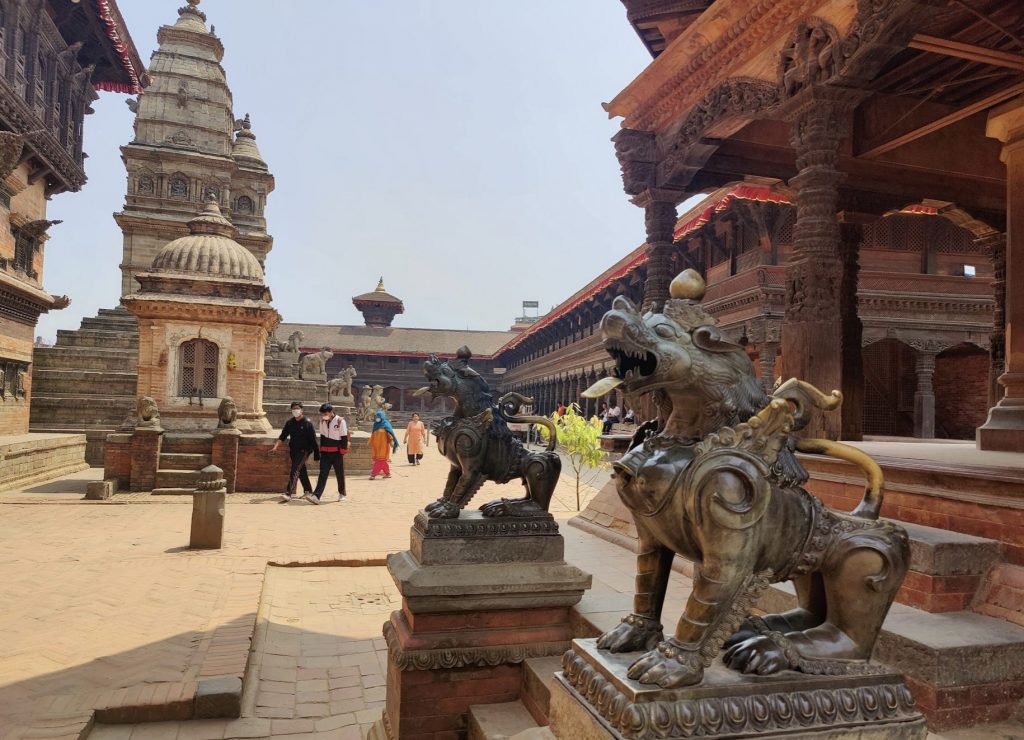
Filmmakers can move from Himalayan deserts and alpine mountain regions to subtropical jungles, heritage cities, rivers, lakes, tea gardens, and spiritual locations without crossing international borders.
Locations like Chitwan National Park offer dense jungle ecosystems, while Kathmandu Valley provides ancient heritage architecture and vibrant urban culture. Pokhara delivers lakeside Himalayan visuals, and Mustang offers remote desert mountain terrain similar to Tibet.
This geographical diversity reduces travel time, simplifies logistics, and minimizes production costs while maximizing visual variety.
Authentic Himalayan and Buddhist Culture
Nepal shares deep cultural and historical connections with Tibet, especially throughout its northern Himalayan regions. Buddhist monasteries, prayer flags, chortens, traditional settlements, and Tibetan-influenced communities remain deeply integrated into everyday life across many mountain areas.
For filmmakers, this creates authentic visual storytelling opportunities with genuine cultural depth and realism.
Rather than relying heavily on production design or constructed sets, many productions filming in Nepal can capture naturally existing Himalayan environments that visually and culturally align with Tibetan-inspired narratives.
Greater Creative Freedom for International Productions
Another major reason international filmmakers choose Nepal is operational freedom. Productions generally experience fewer restrictions regarding movement, location access, scheduling flexibility, and creative execution.
Visa processes for international crews are relatively straightforward, local coordination is efficient, and productions can adapt dynamically during shoots based on evolving creative or environmental conditions.
This level of flexibility is especially important for documentaries, adventure productions, and unscripted content where real-time decision-making is essential.
For producers balancing cinematic ambition with practical production realities, Nepal provides a highly workable environment that supports both creativity and operational efficiency.
Why Kathmandu Films Supports International Productions in Nepal
Kathmandu Films specializes in line production and fixing services for international productions filming across Nepal. With extensive experience in remote mountain shoots, documentaries, commercials, feature films, and television productions, our team helps international crews navigate Nepal efficiently and professionally.
We provide complete support across all stages of production, including permits, logistics, crew coordination, equipment management, transportation, accommodation, customs support, and remote filming operations throughout Nepal.
From Kathmandu to Mustang, Everest, Dolpo, and beyond, we help productions execute safely, efficiently, and according to international standards.
Final Thoughts
For international productions seeking the visual power of Tibet without the operational limitations and logistical complexity, Nepal has emerged as the smarter and more efficient alternative.
With world-class Himalayan landscapes, authentic Buddhist culture, experienced local production support, flexible filming systems, and competitive production costs, Nepal offers filmmakers extraordinary creative opportunities with greater control and operational freedom.
Whether producing a feature film, documentary, travel series, commercial campaign, or streaming production, Nepal provides the cinematic scale and production infrastructure required to bring ambitious stories to life.
If you are planning to film in Nepal, Kathmandu Films can help manage your production from pre-production to final delivery.
Contact: info@kathmandufilms.com