Wildlife Filming in Nepal
Complete Guide to Filming Tigers, Rhinos & Rare Himalayan Wildlife
Nepal is one of the world’s most extraordinary destinations for wildlife filmmaking. From the dense jungles of Chitwan and Bardia to the remote Himalayan ranges, the country offers access to rare and endangered species that are highly sought after by international filmmakers, broadcasters, and streaming platforms. Nepal’s biodiversity, combined with its dramatic landscapes, makes it an exceptional destination for wildlife documentaries, television productions, feature films, and commercial projects.
One of Nepal’s greatest advantages for wildlife filmmaking is the diversity of species accessible within a relatively compact geographical area. Productions can capture Bengal tigers in subtropical jungles, one-horned rhinoceros in riverine grasslands, snow leopards in high-altitude Himalayan regions, red pandas in dense mountain forests, and a wide range of elephants, crocodiles, deer, monkeys, and more than 850 bird species. National parks such as Chitwan and Bardia allow filmmakers to access multiple iconic species within a single production schedule, making Nepal highly efficient for international wildlife productions.
For international broadcasters and documentary filmmakers, certain species in Nepal hold particularly high storytelling and commercial value. Bengal tigers, one-horned rhinoceros, and snow leopards are among the most sought-after species for premium wildlife productions. Other important species include Asian elephants, red pandas, gharial crocodiles, Himalayan birdlife, langurs, monkeys, and various jungle mammals. These species frequently appear in productions for global platforms such as Netflix, BBC, National Geographic, and Discovery.
Wildlife filming in Nepal requires a structured and highly regulated permit process involving multiple government authorities. International productions must first obtain a national film permit issued by the Film Development Board. Additional wildlife filming permissions are required from the Department of National Parks and Wildlife Conservation for productions filming inside protected areas such as Chitwan National Park, Bardia National Park, conservation areas, and wildlife reserves. Productions using drones must also secure multi-agency drone approvals, while shoots in restricted Himalayan regions may require additional immigration and conservation permits.
For international wildlife shoots, the government generally assigns a liaison officer, and productions are required to work with park rangers during filming operations inside protected areas. These measures ensure environmental compliance, wildlife protection, and operational safety throughout the production process.
Successful wildlife filming in Nepal depends heavily on advance planning and local coordination. Productions typically begin by partnering with an experienced local production company, preparing documentation such as scripts, crew lists, equipment details, and shooting schedules, and then submitting applications through the appropriate government channels. Once permits are approved, productions finalize field logistics, transportation, local crew, guides, trackers, and operational planning. Wildlife productions often require significantly more preparation time compared to standard filming projects.
Permit timelines vary depending on the type of production. Basic filming projects may take one to two weeks for approvals, while wildlife productions generally require two to four weeks. Productions involving drone operations may require up to five weeks due to multi-agency clearances. For professional international productions, beginning the permit process at least one month in advance is strongly recommended.
Wildlife filming in Nepal is considered a premium production category due to its operational complexity and specialized requirements. Budgets commonly include government permit fees, national park filming charges, liaison officer and ranger costs, transportation, trackers, guides, equipment logistics, customs handling, and remote field operations. Productions filming in remote regions or using helicopters and specialized equipment may require significantly higher logistical budgets.
Wildlife filming is strictly regulated to protect both animals and fragile ecosystems. International productions must follow strict ethical and safety guidelines, including maintaining safe distances from animals, avoiding loud disturbances, refraining from using flash lighting during night filming, and strictly following instructions from park rangers and conservation authorities. Productions are also expected to minimize environmental impact by avoiding littering, restricting unnecessary vehicle movement, and preventing disruption to natural habitats. Failure to comply with regulations can result in permit cancellation and legal consequences.
Timing is one of the most important factors in successful wildlife filming. The best season for wildlife productions in Nepal is generally from October to March, when weather conditions are clear and animal visibility is higher. April and May can also provide strong wildlife sightings near water sources, although temperatures become significantly hotter. The monsoon season from June to September is considered operationally difficult due to heavy rainfall, reduced accessibility, and dense vegetation. For snow leopard filming, winter months between December and February are preferred in high-altitude Himalayan regions.
Wildlife filmmaking also requires patience and realistic expectations. Tiger sightings are never guaranteed, tracking operations may take several days, and weather or terrain conditions can significantly affect production schedules. Remote filming environments require strong logistical coordination, experienced trackers, and operational flexibility. This is why working with an experienced local fixer and production company is critical for successful wildlife productions in Nepal.
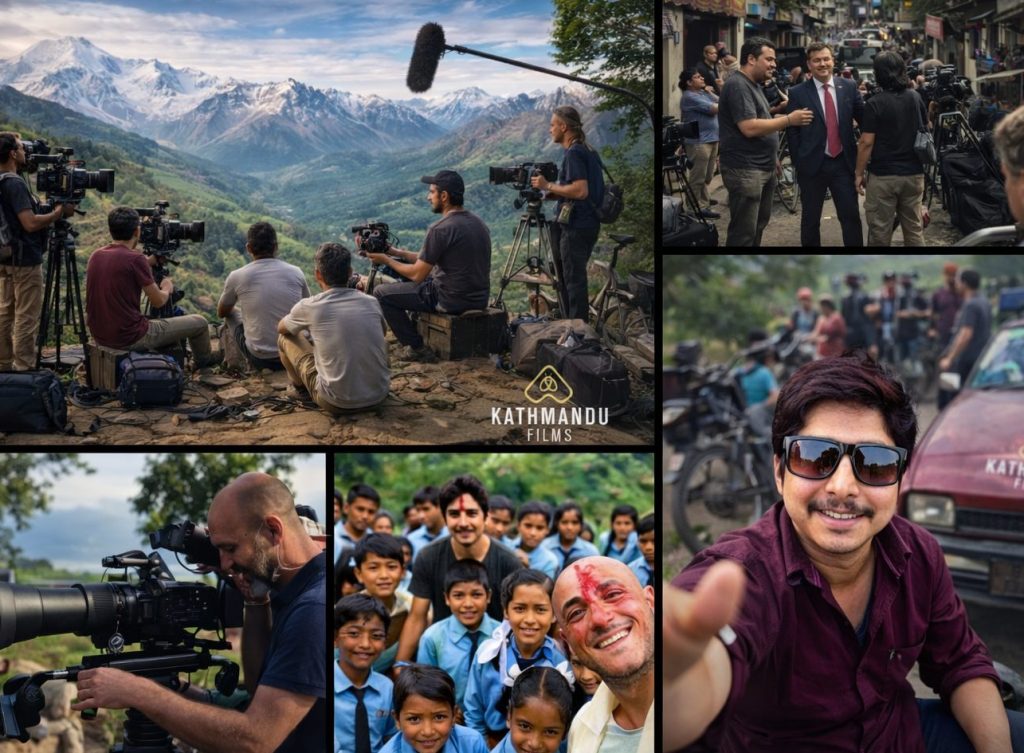
Kathmandu Films provides complete production support for wildlife filming in Nepal and is trusted by international filmmakers for complex productions in remote and environmentally sensitive regions. The company offers full permit handling, government coordination, experienced wildlife crew, trackers, guides, location scouting, logistics management, equipment coordination, and safety planning. With experience across more than 200 international productions, Kathmandu Films ensures projects are managed professionally, efficiently, and in compliance with Nepal’s wildlife and conservation regulations.
Wildlife filming in Nepal offers extraordinary opportunities to capture rare and iconic species in their natural habitats. However, successful execution requires proper permits, detailed planning, strict compliance with conservation regulations, and experienced local support. For international productions, working with a reliable production partner is essential to ensuring efficient operations, environmental responsibility, and successful production outcomes.
Work With Kathmandu Films
If you are planning a wildlife documentary, feature film, commercial, or television production in Nepal, Kathmandu Films provides complete end-to-end production support, from permits and logistics to on-ground execution in Nepal’s national parks and remote Himalayan regions.