FILM SHOOTING IN NEPAL
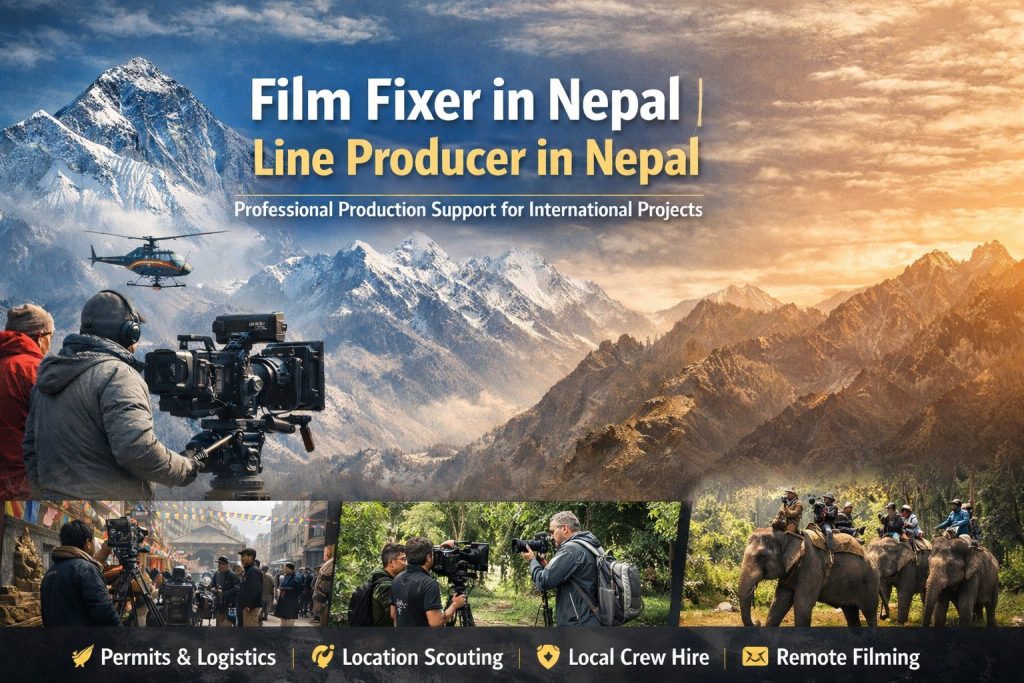
Shooting a film in Nepal offers a unique blend of stunning natural landscapes, rich cultural heritage, and diverse environments. However, it also comes with specific logistical, legal, and practical considerations. Here’s a comprehensive guide to help you navigate the process:
- Pre-Production Planning
- Location Scouting: Nepal offers a wide range of filming locations, from the Himalayas to ancient cities and jungles. It’s important to scout locations early to understand the terrain, weather conditions, and accessibility.
- Fixer Services: Hiring a local fixer is crucial. They can assist with location scouting, permits, logistics, and cultural nuances, ensuring smooth operations on the ground.
- Permits and Legal Requirements
- Film Permit: You must obtain a film permit from the Nepal Film Development Board (NFDB). This is mandatory for all types of filming, including documentaries, feature films, commercials, and TV shows.
- Protected Areas Permits: If you plan to film in national parks, conservation areas, or near religious sites, additional permits are required from the relevant authorities (e.g., the Department of National Parks and Wildlife Conservation).
- Drone Permits: Drone use is regulated in Nepal. You’ll need to obtain a separate permit for aerial filming from the Civil Aviation Authority of Nepal (CAAN).
- Hiring Local Crew and Equipment
- Local Crew: Nepal has a growing pool of experienced film professionals, including cinematographers, sound technicians, and production assistants. Hiring local crew can be cost-effective and helpful for navigating local customs and languages.
- Equipment Rental: While some equipment can be rented locally, it’s advisable to bring specialized gear with you. Ensure that all imported equipment is declared at customs to avoid issues.
- Logistics and Transportation
- Travel and Accommodation: Depending on your filming location, travel can be challenging. In remote areas, you may need to arrange for helicopters, porters, or off-road vehicles. Accommodation options range from luxury hotels in cities to basic teahouses in trekking areas.
- Weather Considerations: Nepal has a diverse climate, with the monsoon season (June to September) bringing heavy rains that can disrupt travel and filming schedules. The best seasons for filming are typically pre-monsoon (March to May) and post-monsoon (October to November).
- Cultural Sensitivity and Community Engagement
- Respect for Local Customs: Nepal is a culturally rich and diverse country with deep religious traditions. It’s essential to show respect for local customs, especially when filming in temples, monasteries, or rural communities.
- Community Engagement: When filming in villages or remote areas, it’s good practice to engage with the local community leaders, explain your project, and seek their consent.
- Health and Safety
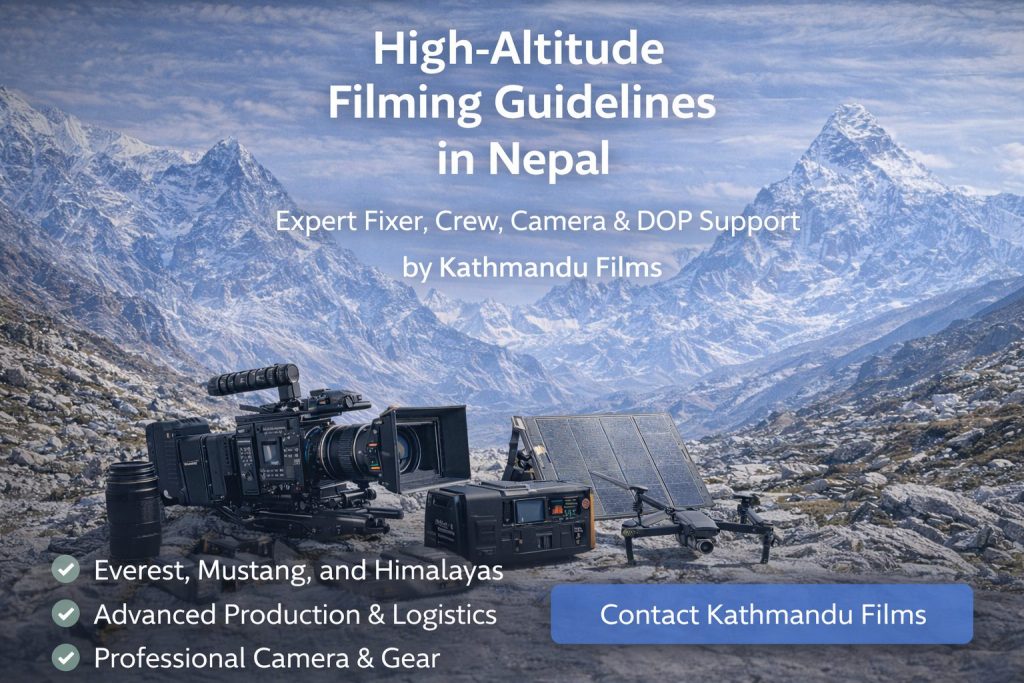
- Altitude Considerations: If you’re filming in high-altitude areas like the Everest region or Annapurna, be aware of the risks of altitude sickness. Proper acclimatization and medical preparation are essential.
- Medical Precautions: Carry a comprehensive first aid kit, and be aware of the nearest medical facilities. In remote areas, you may need to arrange for emergency evacuation plans.
- Vaccinations: Ensure that you and your crew are up-to-date on recommended vaccinations for Nepal, including those for typhoid, hepatitis, and rabies.
- Insurance
- Production Insurance: Make sure your production is fully insured, including coverage for equipment, crew health, and liability. Confirm that your insurance covers high-altitude activities if applicable.
- Local Insurance Requirements: You may need to meet specific local insurance requirements, particularly if employing local crew or using local equipment.
- Post-Production Considerations
- Post-Production in Nepal: While there are some post-production facilities in Kathmandu, many filmmakers prefer to complete post-production work outside of Nepal. However, it can be beneficial to do preliminary editing and review on-site to ensure footage is captured as needed.
- Budgeting
- Cost Considerations: Filming in Nepal can be cost-effective compared to many other countries, but budgeting for potential delays, additional permits, and logistical challenges is important.
- Currency: The local currency is the Nepalese Rupee (NPR). While major cities accept credit cards and have ATMs, cash is necessary in rural areas.
- Contacts and Resources
- Nepal Film Development Board (NFDB): The NFDB is your primary contact for all official matters related to film production in Nepal. They can assist with permits, provide guidelines, and connect you with local resources.
- Embassies and Consulates: If you’re an international crew, keep in touch with your embassy or consulate in Nepal for assistance with visas, legal matters, or emergencies.
Contact Kathmandu Films
Email: info@kathmandufilms.com
Phone: +977 9801012311